AP Swatch Colors and Royal Pop: What Product Colour Variations Teach Businesses About Trademark and IP Protection
Learn what the AP Swatch Royal Pop colors teach businesses about trademarks, product design protection, patents and brand collaboration strategy in Singapore.

Hannah Poh
Corporate Lawyer
AP Swatch Colors and Royal Pop: What Product Colour Variations Teach Businesses About Trademark and IP Protection
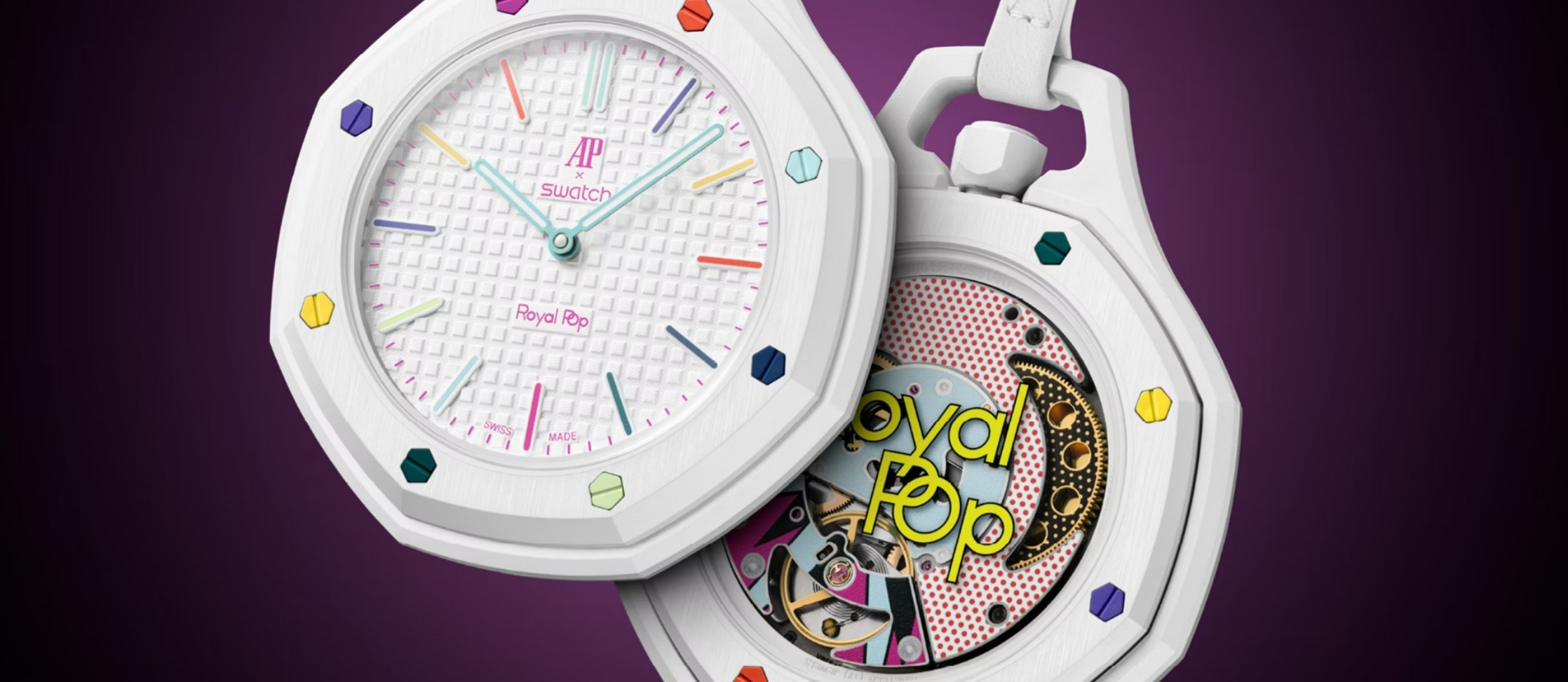
The Audemars Piguet and Swatch collaboration has created a wave of attention across the watch world. The new Swatch Royal Pop collection brings together the design language of Audemars Piguet’s Royal Oak with the playful modular spirit of Swatch’s POP line.
For many people, the first thing they search is not the legal structure behind the collaboration. They search for the colours.
Search terms such as AP Swatch colors, AP Swatch Royal Pop colors, Royal Pop colourways, AP Swatch blue, AP Swatch pink, AP Swatch black and Audemars Piguet Swatch colors are likely to attract strong interest because colour is often the easiest way for consumers to compare, remember and talk about a product.
But behind these colours is a much deeper intellectual property lesson.
A product launch like Royal Pop is not only about watches. It is about brand names, product names, colour variations, design identity, patented technology, collaboration rights and consumer perception. These are all important parts of a strong intellectual property strategy.
Why AP Swatch Colors Became a Search Trend
When a major collaboration launches, consumers naturally compare the available variations. In the case of the Royal Pop colourways, the colours became part of the product story.
This is important because colours help consumers identify, describe and emotionally connect with products. A customer may not remember the full technical specification of a watch, but they may remember the blue one, the pink one, the green one or the black one.
That is why product colour strategy matters.
In many industries, colour is not just decoration. It can affect brand recognition, product positioning and resale interest. Fashion brands, watch brands, technology brands, cosmetics companies and lifestyle businesses often use colours to create seasonal drops, limited editions and collector demand.
For businesses in Singapore, this creates an important question: can product colours be protected under trademark law?
Can Product Colours Be Protected as Trademarks?
A common business question is whether a colour can be registered as a trademark.
The answer is not always straightforward.
In general, a trademark protects signs that distinguish one trader’s goods or services from another. A trademark can include a word, logo, name, shape or other distinctive sign. In some cases, colour may also be relevant, especially when it has become distinctive of a particular brand or product source.
However, businesses should not assume that simply using a colour automatically gives them exclusive rights over that colour.
For a colour to function as a trademark, it usually needs to do more than look attractive. It must help consumers identify the commercial origin of the goods or services. This is often easier when the colour has been used consistently over time and consumers have learned to associate that colour with a particular brand.
This is where many businesses misunderstand IP protection.
A business may think, “This colour is part of my product, so nobody else can use it.” In reality, colour protection can be more complex. A business may need to consider whether the colour is distinctive, whether it is commonly used in the industry, whether it is functional, whether competitors need to use similar colours, and whether consumers actually associate the colour with the brand.
This is why businesses should seek advice before relying on colour alone as a trademark strategy. A stronger approach is often to protect the brand name, product name, logo, packaging, product design and overall brand identity together.
For businesses planning a product launch, early trademark registration in Singapore can help protect the most important brand assets before the product enters the market.
Why the Product Name Matters More Than Most Businesses Realise
The name “Royal Pop” is a major part of the collaboration’s appeal.
A product name can become a powerful trademark asset because it gives the market something easy to search, discuss and remember. In SEO terms, the product name becomes the keyword. In branding terms, it becomes the commercial identity. In IP terms, it may become a protectable trademark if it satisfies the relevant legal requirements.
This is especially important for collaborations.
When two brands work together, the product name often carries the commercial value of both parties. The name, logo, colour system, packaging and marketing visuals may all need to be controlled carefully.
Before launching a product, businesses should consider whether the product name is available, whether it is too descriptive, whether another business already owns a similar mark, whether the name can be registered, and whether the name can support future product lines.
A good product name can create value. A poorly checked product name can create legal risk.
This is why businesses should understand what can and cannot be registered as a trademark in Singapore before investing heavily in packaging, marketing and advertising.
Colour Variations Can Strengthen a Product Line
Colour variations can be more than visual options. They can help a business create a complete product ecosystem.
A single product in one colour is just one product. But a product released in multiple colourways can become a collection. That collection can attract different customer segments, encourage comparison, create scarcity, and increase social media discussion.
This is why colourways are powerful in watches, sneakers, phones, bags, cosmetics, toys and collectibles.
From an IP perspective, colour variations can support a broader protection strategy. A business may not always be able to own a colour by itself, but it may be able to build protection around the product name, collection name, logo, packaging, product shape, colour combination, advertising visuals and technical innovation behind the product.
This is where trademark, registered design, copyright and patent protection may overlap.
For example, a product colourway may be supported by a distinctive product name. A product shape may be protected through registered design. A technical mechanism may be protected by patent. Marketing images may be protected by copyright law in Singapore. A collaboration agreement may control how each party can use the brand assets.
Product Design Protection: Why Shape and Appearance Matter
The Royal Pop discussion is also about product shape and design identity.
In the watch industry, visual appearance is extremely important. The shape of the bezel, the dial pattern, the screws, the case proportion, the material, the strap system and the colourway all contribute to recognition.
For businesses outside the watch industry, the same principle applies.
A product may be recognised because of its bottle shape, packaging layout, handle design, container form, interface screen, furniture profile, jewellery pattern, fashion silhouette or device casing.
If the visual appearance of a product is commercially important, businesses should consider whether design protection in Singapore
Businesses should not wait until imitation happens before thinking about design protection. In many cases, design protection should be considered before public launch.
Patents: The Technical Side of Product Hype
The AP Swatch Royal Pop collaboration is also interesting because the watch is not only a visual product. The collection has been reported to use a Sistem51 movement with 15 active patents, giving the product a technical story in addition to its colour and design story.
This is a valuable IP lesson.
Many businesses think patents are only relevant to deep technology companies. In reality, patents can be relevant whenever a product includes a new technical solution, mechanism, process, system or functional improvement.
A product can generate hype because of its appearance, but long-term competitive advantage may also come from the technology behind it.
Where a product includes a technical innovation, companies should consider patent protection in Singapore before the idea is exposed to the market.
Brand Collaborations Need Clear IP Ownership
The AP Swatch Royal Pop collaboration also shows why brand collaborations need careful IP planning.
When two brands collaborate, many questions arise.
Who owns the product name?
Who owns the campaign visuals?
Who owns the product design?
Who owns the customer data from the launch?
Who can use the collaboration name after the campaign ends?
Can either party release similar products in the future?
Who handles enforcement against copycats?
Who controls international trademark filing?
Who approves advertising materials?
Who owns improvements created during the collaboration?
These questions should not be left vague.
For large brands, these matters are usually handled through detailed agreements. For smaller businesses, however, collaborations are often arranged informally. This can create disputes later, especially when the product becomes successful.
Businesses should clarify intellectual property ownership before launching a collaboration, not after the collaboration becomes profitable.
AI Hype, Fake Concepts and Copyright Issues
Another interesting point around the AP Swatch Royal Pop hype is the role of online speculation, fan-made visuals and AI-generated concept images. Before major launches, social media can be filled with mockups, rumours and unofficial images. These may create excitement, but they can also create confusion over what is official and what is not.
For businesses, this raises a modern IP issue.
If AI-generated images, fan concepts or unofficial product mockups go viral, consumers may wrongly believe they are official brand materials. This can affect brand reputation, customer expectations and launch strategy.
Businesses using AI-generated visuals for campaigns should understand AI generated content copyright Singapore before using such materials commercially.
The Risk of Fast-Moving Copycats
Whenever a product becomes popular, copycats can appear quickly.
This is especially true when the product has strong visual appeal and consumers are searching for colour variations, lower-priced alternatives or accessories. A high-hype launch can create opportunities for third parties to produce lookalike products, compatible accessories, modified versions or misleading marketing.
This is where IP rights become commercially important.
A business with registered trademarks, registered designs, patents and well-drafted agreements is in a stronger position to respond to unauthorised copying or confusing use. A business without proper IP protection may find it harder to act quickly.
If another party uses a confusingly similar name, logo or product identity, businesses may need to consider trademark infringement in Singapore and the available enforcement options.
SEO, Search Demand and IP Strategy Are Connected
The phrase AP Swatch colors may look like a simple search term, but it reveals something important about modern product launches.
Consumers search visually. They search by colour, name, nickname, comparison, price, release date and availability. A successful product becomes searchable from many angles.
This matters because SEO and IP are connected.
If a business owns a strong trademark, that trademark can become a search asset. If the product name is distinctive, it can rank better and be easier to defend. If the product line has consistent naming, colours and visual identity, consumers are more likely to recognise it. If the business protects its IP early, it is better positioned to preserve the value created by search demand.
This is why businesses should treat IP as part of marketing strategy, not merely legal paperwork.
A product launch strategy should consider trademark searches before naming, trademark filing before public launch, design filing before product disclosure, patent review before technical publication, copyright ownership for campaign visuals, collaboration agreements before joint promotion, monitoring after launch, and enforcement if copycats appear.
A product can go viral in days. IP protection should start before that happens.
What Singapore Businesses Can Learn from AP Swatch Royal Pop
The AP Swatch Royal Pop hype offers several useful lessons for Singapore businesses.
First, a strong product name can become a valuable trademark asset. Businesses should not wait until launch day to check whether their product name is available.
Second, colour variations can create consumer demand, but colour protection can be legally complex. Businesses should build protection around the full brand identity, not colour alone.
Third, product appearance matters. If the shape, pattern, packaging or visual design is commercially important, design protection should be considered early.
Fourth, technical innovation should not be ignored. If a product includes a new mechanism, system, material use or functional improvement, patent protection may be relevant.
Fifth, collaborations need proper agreements. When two or more parties contribute brand value, design work, technology or marketing assets, IP ownership must be clearly defined.
Finally, businesses should understand that hype attracts attention from both consumers and competitors. The more successful a launch becomes, the more important IP protection becomes.
Final Thoughts
The AP Swatch Royal Pop collaboration is more than a watch launch. It is a case study in how colour, brand identity, product naming, design language, patents and collaboration strategy can create massive market attention.
For Singapore businesses, the lesson is clear. If your product, brand or collaboration has the potential to attract attention, protect the IP before the market reacts.
A colourway may start as a design decision. A product name may start as a marketing idea. A collaboration may start as a creative partnership. But when the market responds, these assets can become commercially valuable.
For advice on trademark registration in Singapore, product design protection, patent strategy or collaboration agreements, contact Absolute IP at support@absoluteip.com.