What Can and Cannot Be Registered as a Trademark in Singapore Complete Guide
Learn what can and cannot be registered as a trademark in Singapore. Understand eligibility rules, examples, and how to avoid rejection.

Hannah Poh
Corporate Lawyer
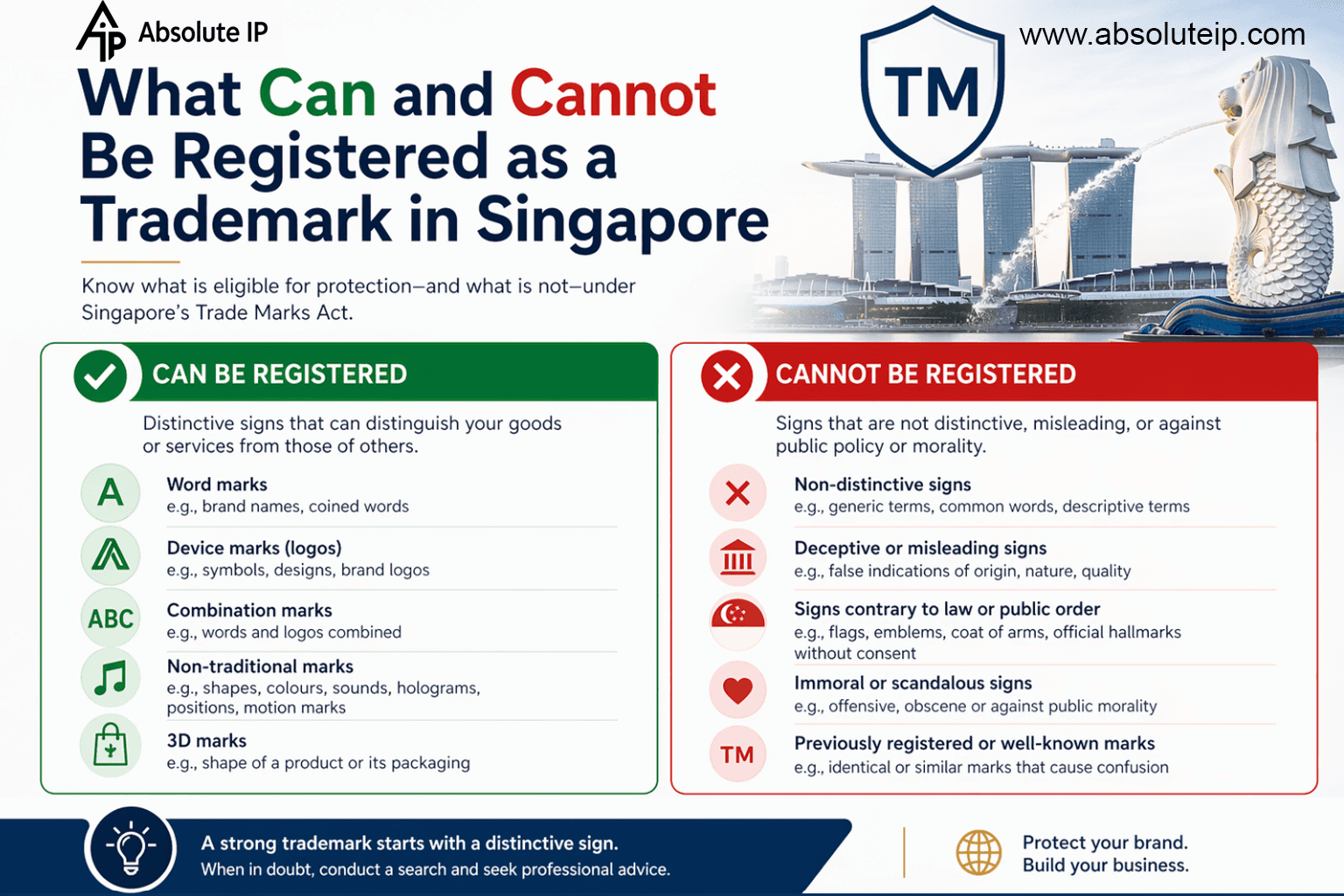
What Can and Cannot Be Registered as a Trademark in Singapore
If you are planning to protect your brand, one of the most important questions to ask is whether your trademark can actually be registered in Singapore.
Not all names, logos, or symbols qualify for trademark protection. Understanding what can and cannot be registered helps you avoid rejection, delays, and unnecessary costs.
Singapore has clear legal requirements for trademarks, and failing to meet them can result in your application being refused.
This guide explains what is eligible for trademark registration in Singapore and what you should avoid.
What Can Be Registered as a Trademark in Singapore
A trademark must be distinctive and capable of identifying your goods or services.
Common types of trademarks that can be registered include:
Brand Names
Unique business names that distinguish your company from others can be registered as trademarks.
For example, invented or coined words are typically easier to register because they are inherently distinctive.
If you are planning to protect your brand through trademark registration Singapore choosing a strong and unique name is the first step.
Logos and Symbols
Logos that visually represent your brand are commonly registered as trademarks.
These include:
Graphic designs
Icons
Stylised brand names
Distinctive visual elements increase the chances of approval.
Slogans and Taglines
Catchy and unique slogans can also be registered, provided they are not purely descriptive.
For example, a creative tagline that does not directly describe the product is more likely to qualify.
Shapes and Packaging
In some cases, unique product shapes or packaging designs can be registered as trademarks.
However, these must be distinctive and not functional in nature.
Combination Marks
Many businesses register a combination of elements, such as a logo with text.
This provides broader protection and strengthens brand identity.
What Cannot Be Registered as a Trademark in Singapore
Understanding what is not allowed is just as important as knowing what is allowed.
Generic or Descriptive Terms
Words that describe the nature, quality, or function of a product or service cannot be registered.
For example:
“Best Coffee” for a coffee shop
“Fast Delivery” for a logistics service
These terms are too general and must remain available for public use.
This is one of the most common issues highlighted in common trademark mistakes in Singapore and often leads to rejection.
Marks Similar to Existing Trademarks
If your trademark is identical or similar to an existing registered mark, it will likely be rejected.
Similarity can be based on:
Visual appearance
Sound or pronunciation
Overall impression
Before applying, it is important to check trademark availability in Singapore to reduce the risk of conflicts.
Misleading or Deceptive Marks
Trademarks that mislead consumers about the nature or origin of goods or services are not allowed.
For example:
Claiming a product is from a certain country when it is not
Using words that create false expectations
Offensive or Prohibited Content
Marks that contain offensive, immoral, or prohibited elements will not be accepted.
Singapore authorities maintain strict standards on acceptable content.
Common Industry Terms
Words that are commonly used in a particular industry cannot be monopolised.
This ensures fair competition and prevents businesses from controlling generic terms.
Why Distinctiveness is the Key Factor
The most important requirement for trademark registration is distinctiveness.
A strong trademark should:
Be unique
Not describe the product directly
Be easy to recognise
Distinctive trademarks are easier to register, enforce, and protect.
How to Strengthen Your Trademark Before Filing
To improve your chances of approval:
Choose a creative and unique name
Avoid descriptive language
Combine text with visual elements
Conduct a proper trademark search
Understanding the process to register a trademark in Singapore can help you prepare a stronger application.
What Happens If Your Trademark is Rejected
If your trademark does not meet the requirements, the authorities may issue an objection.
You may be required to:
Provide clarification
Modify your application
Submit legal arguments
This can delay the process and increase costs.
Understanding the trademark registration cost Singapore helps you plan for potential scenarios.
Importance of Choosing the Right Trademark Early
Selecting the right trademark at the beginning saves time, cost, and effort.
A well-chosen trademark:
Reduces the risk of rejection
Strengthens your brand identity
Provides better legal protection
It also allows you to move forward confidently with your business strategy.
Why Work with Absolute IP
Determining whether a trademark is registrable requires more than just basic checks.
Absolute IP helps businesses:
Assess trademark strength and eligibility
Conduct detailed searches
Structure applications correctly
Avoid costly mistakes
This ensures that your trademark is not only approved but also provides strong protection.
Get Started with Trademark Registration
If you are unsure whether your trademark can be registered in Singapore, it is best to seek professional advice before filing.
Contact Absolute IP at support@absoluteip.com to evaluate your trademark and ensure your brand is protected effectively.